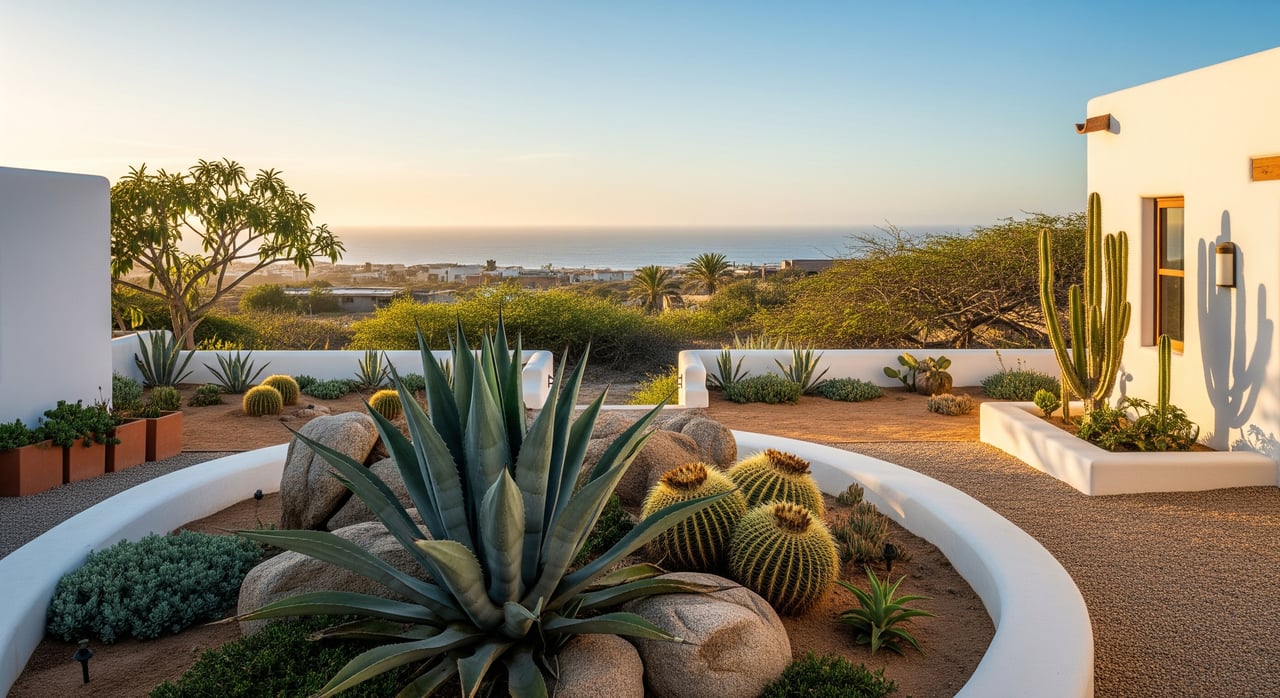
What if your Todos Santos yard could look stunning while using a fraction of the water? If you split time between homes or rely on trucked deliveries, water-wise landscaping is not just smart, it is practical. In this guide, you will learn how to plan a xeriscape for Baja’s coastal climate, choose climate-ready plants, set up efficient irrigation you can manage remotely, and keep maintenance simple even when you are away. Let’s dive in.
Why xeriscape fits Todos Santos
Todos Santos sits on the Pacific side of Baja California Sur with an arid to semi‑arid climate. You get long dry stretches, mild winters, and most rainfall in late summer to autumn. Hurricane season typically runs June through November, bringing short bursts of heavy rain and strong winds.
Near the coast, soils are often sandy and fast draining, which is perfect for succulents but challenging for thirsty plants. Coastal winds and salt spray increase water loss and can stress tender foliage. Many homes use municipal water, wells, or trucked deliveries stored in cisterns, so a low-water design protects your budget and your supply.
What this means for your landscape:
- Favor drought-tolerant, salt- and wind-tough species once established.
- Capture rare rain with shallow basins, swales, or terraces.
- Design for deep, infrequent watering rather than daily misting.
- Plan for storm events with good drainage and erosion control.
Plan your hydrozones
Start with a simple plan that groups plants by water need. This is the backbone of a successful xeriscape in Baja.
- Group by water need. Create three zones: very low (cacti, agaves, aloes), low (native shrubs and small trees), and moderate (edible beds or any turf you choose to keep very small).
- Place high-use spaces near the house. Keep patios, outdoor kitchens, and container gardens close for easy care.
- Shape the site to catch rain. Use shallow basins, swales, or terraces to direct episodic rainfall into planted beds rather than into the street.
Choose climate-ready plants
Prioritize native and regionally adapted species that handle heat, wind, and limited water once established. Source from reputable local nurseries and avoid removing mature natives from the wild.
Trees and shrubs with structure
- Mesquite or regional palo verde types (Prosopis and local Parkinsonia relatives) for light shade and low water once established.
- Bursera (elephant tree or torote) where locally available and responsibly sourced.
- Bougainvillea for color with low water after establishment.
- Caesalpinia species (bird-of-paradise-type trees) for seasonal blooms and durability.
Note: Some Baja endemics, including certain Fouquieria species and large columnar cacti, may be protected. Handle with care and follow local guidance.
Succulents and cacti for accents
- Agave species such as Agave americana and Agave attenuata.
- Aloe varieties for sculptural forms and seasonal flowers.
- Columnar cacti like Pachycereus pringlei (cardón) and other barrel or hedgehog types.
- Opuntia (prickly pear) for drought resilience and texture.
Groundcovers and herbs with low water
- Gazania and sedums for low, colorful coverage.
- Native purslane and Portulaca relatives in sunny, well-drained beds.
- Herbs like rosemary, sage, and thyme for culinary use with minimal irrigation.
Planting tips:
- In sandy soils, add compost to planting holes for non-succulents to improve moisture retention. Avoid heavy amendment for cacti and agaves that prefer fast drainage.
- Test for pH and salinity if you are near the beach. Choose salt-tolerant species close to the shoreline.
Irrigation that saves water
Drip irrigation and micro-emitters are the most efficient way to water in Todos Santos. They deliver moisture directly to roots, reduce evaporation, and allow precise control.
- Use drip lines with pressure-compensating emitters so each plant gets similar flow, even on slopes.
- Zone irrigation by plant type and sun exposure. Trees and shrubs often get individual emitters, while groundcovers can use inline drip.
- Install smart controllers with weather or soil-moisture inputs. Wi‑Fi access lets you adjust schedules remotely, which is ideal for second-home owners.
- Water early in the morning. Favor deep, infrequent cycles to build deep roots. Turn systems down or off during and after heavy rain.
- Include accessible shutoffs and consider a master solenoid so a caretaker can quickly stop flow if a leak is detected.
Absentee guideline:
- After establishment, very drought-tolerant beds can often hold with a conservative cycle every 10 to 21 days, adjusted for heat and exposure.
- Newly installed plants need more frequent checks in the first 6 to 12 months.
Shade, wind, and salt strategies
Your microclimate matters as much as your plant list in a coastal town.
- Use trees for filtered shade to cool patios and reduce water stress on understory plants.
- Create windbreaks with tough shrubs on the windward side, especially on elevated or exposed lots.
- Choose salt-tolerant species near the shoreline and rinse salt-sensitive leaves after storms when possible.
- Stake young trees during establishment and before hurricane season. Ensure root zones drain well to prevent blowdowns.
Smart surfaces and mulch
Surface choices can make or break a xeriscape.
- Use gravel or decomposed granite for a clean look that suppresses weeds and reduces evaporation.
- Consider organic mulch like wood chips around non-succulent shrubs and trees, but avoid thick layers that increase irrigation needs.
- Keep all mulches a few inches away from crowns and trunks to prevent rot.
- Use permeable paths and patios to let rain infiltrate into planted zones.
Maintenance made simple for second-home owners
A light, regular touch keeps performance high with minimal water use.
- Prune lightly to maintain structure and airflow. Remove spent blooms if they drain plant energy.
- Inspect drip lines seasonally for clogs, leaks, or critter damage. Clean filters and flush lines as needed.
- Monitor for common pests like scale, mealybugs, and agave snout weevil. Early detection saves plants and water.
- Reduce irrigation during rainy weeks and after major storms.
Costs, phasing, and sourcing
Xeriscapes often have higher upfront planning and installation costs, then lower water and maintenance costs over time. You can phase the work if you prefer.
- Phase 1: Install hardscape, drainage, mainlines, and key trees for structure.
- Phase 2: Add shrubs and groundcovers, then finish with accent succulents.
- Choose mature container plants at install so they can establish faster with less frequent watering.
- Hire local landscapers and nurseries who understand Baja soils, winds, and protected species. Ask for references and a written maintenance plan.
Stay compliant and protect biodiversity
Baja California Sur is home to unique native plants. Some species may be protected or require special handling.
- Before removing or transplanting mature natives, consult environmental authorities such as SEMARNAT and the local municipality. Large cacti and certain Fouquieria species may be regulated.
- If you plan a well or large cistern, check permitting requirements with water authorities such as CONAGUA and local offices.
- Buy from reputable local nurseries and avoid wild collection to protect native populations.
A simple first-year schedule
Use this high-level guide to help a caretaker keep things on track.
- Months 0 to 3: Check irrigation weekly. Keep soil evenly moist around new shrubs and trees without waterlogging. Inspect stakes and ties before windy days.
- Months 3 to 6: Shift to deeper, less frequent watering. Lightly prune for shape and remove any stressed plant material.
- Months 6 to 12: Continue deep, infrequent cycles. Refresh mulch, check for pests, and clean filters. Reduce watering during rainy periods.
Bring it all together
A well-planned xeriscape in Todos Santos balances beauty, resilience, and practicality. By grouping plants by water need, choosing climate-adapted species, and using smart drip irrigation, you can enjoy a striking outdoor space that respects local conditions and your water budget. If you are weighing homes with existing low-water landscapes or considering a lot that is perfect for a custom build, local guidance makes a real difference.
To discuss properties that fit your vision for effortless Baja living, connect with Apex Real Estate Los Cabos. Schedule a private consultation.
FAQs
What is xeriscaping in Todos Santos?
- Xeriscaping is a low-water landscape approach that groups plants by water needs, uses drought-tolerant and salt-tolerant species, and relies on efficient drip irrigation tailored to Baja’s arid coastal climate.
How much water can a xeriscape save in BCS?
- Savings vary by design and your starting point, but xeriscapes typically reduce outdoor water use substantially by using drip irrigation, hydrozoning, and drought-tolerant plants.
Which plants handle coastal wind and salt spray?
- Consider agaves, aloes, cardón and other columnar cacti, prickly pear, bougainvillea, mesquite or regional palo verde types, and Gazania or sedums for groundcover near exposed areas.
How should I irrigate while I am away from my second home?
- Use pressure-compensating drip with a smart controller and Wi‑Fi access, set deep and infrequent cycles, include accessible shutoffs, and arrange periodic local checks, especially after storms.
Do I need permits for wells or cisterns in Todos Santos?
- Water extraction and storage can require permits, so consult CONAGUA and local municipal offices before drilling a well or installing large storage systems.
Are any native plants protected in Baja California Sur?
- Some endemic species, including certain Fouquieria and large columnar cacti, may be protected, so coordinate with SEMARNAT and local authorities before removing or transplanting natives.